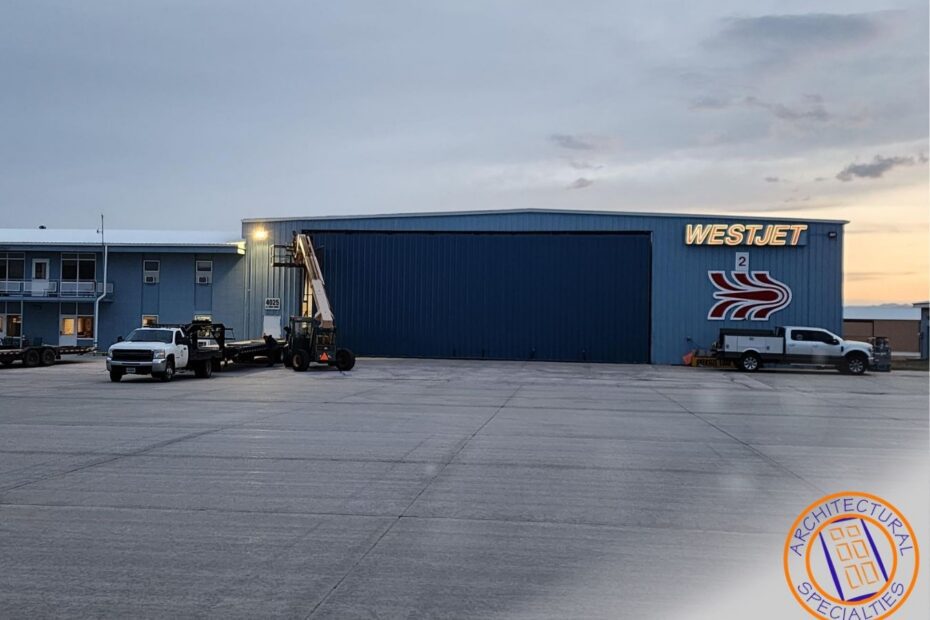
Choosing a hangar door isn’t just about closing a gap in a wall; it’s about selecting the only moving part of your building that determines functionality for decades. Most owners spend months designing the perfect facility, yet common industry experience suggests the door system is often an afterthought until it fails. If your tracks freeze during a South Dakota winter or the header hangs too low, that expensive structure becomes little more than a storage shed.
Space is your most valuable asset, specifically the “clear opening” – the actual vertical space available to pull your plane through. Traditional bi-fold doors act like a closet door that folds in the middle, effectively “eating” valuable clearance height when tucked away. In practice, this loss often forces pilots to build taller, more expensive walls just to fit the same aircraft tail.
Not all hydraulic doors are built the same. A PowerLift-style door uses a fully welded frame and a top-hinged hydraulic design that becomes part of the building structure. By carrying loads evenly into the header and jambs, the system reduces deflection and maintains alignment over time. Compared to lighter, bolt-together door systems shipped as component kits, this results in a stiffer, more stable door that requires fewer adjustments and performs reliably in high wind and snow conditions.
For aviation building upgrades in Wyoming wind or local snow loads, simplicity creates durability. By removing the friction points found in older hangar door systems, you ensure your next flight starts with a door that opens effortlessly every time.
Why Traditional Bi-Fold Doors Cost You Valuable Headroom
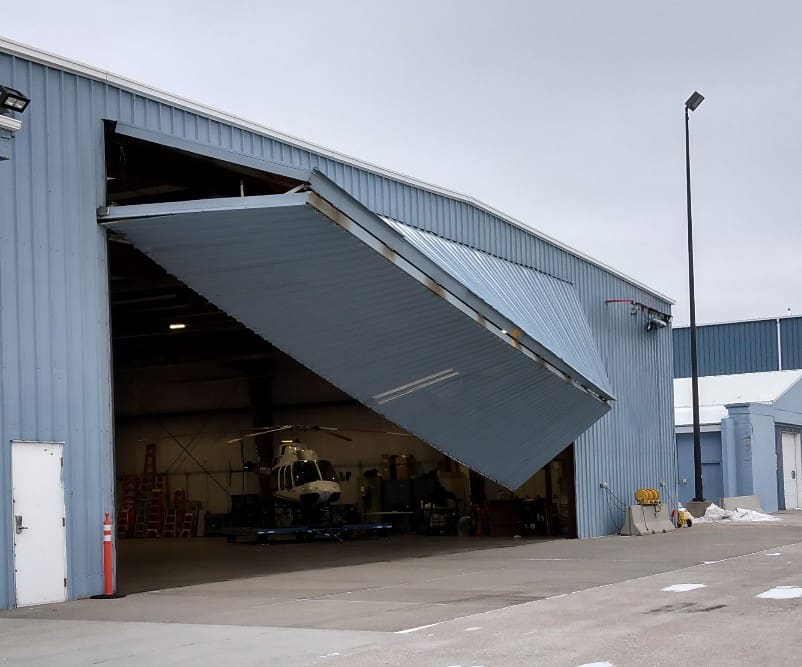
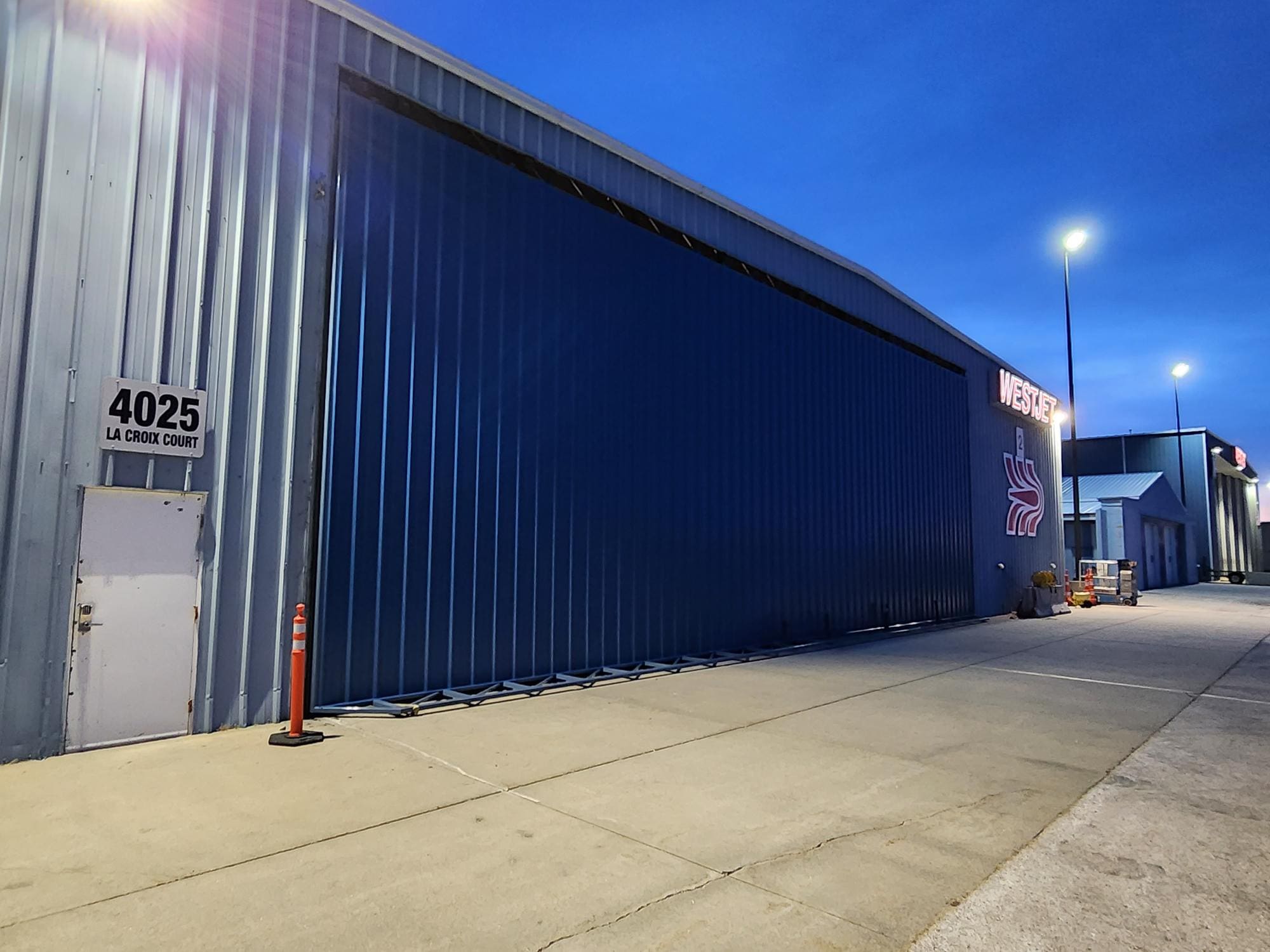
When you hit the “open” button on a bi-fold door, the system doesn’t just vanish out of the way; it folds outward like a closet door. Because of geometry, that folded stack of steel never lays perfectly flat against the building. Instead, it creates a triangular “wedge” that hangs directly below your header, effectively stealing 12 to 24 inches of your vertical clearance. If you are retrofitting an older pole barn to fit a taller aircraft or a large combine, losing two feet of height to the door’s mechanics might force you to raise the entire roof – a massive construction expense just to gain a few inches of clearance.
Lifting these dual panels relies on a system of cables, pulleys, and winding drums, structurally similar to curtain rigging in a theater. While effective initially, steel cables are prone to stretching, fraying, and overwinding in inconsistent patterns. This forces you to spend time on a ladder adjusting tension to ensure the door seals tight against the wind. If a single cable snaps under the load of heavy snow or during a gust, the door can bind or drop, turning a routine opening into a safety hazard.
Consider how these specific limitations affect your daily operations:
- Reduced Headroom: The folding wedge significantly reduces your usable “clear opening” height.
- Maintenance Burden: Cables require regular tensioning and eventual replacement.
- Slow Operation: Winding drums typically lift much slower than direct-drive hydraulics.
While moving away from cables solves the tension problem, some manufacturers try to fix the headroom issue by adding complicated arms and external hinges to their hydraulic systems, which unfortunately introduces a new set of mechanical risks.
The Hidden Complexity of Linkage and Cam-Style Hydraulic Doors
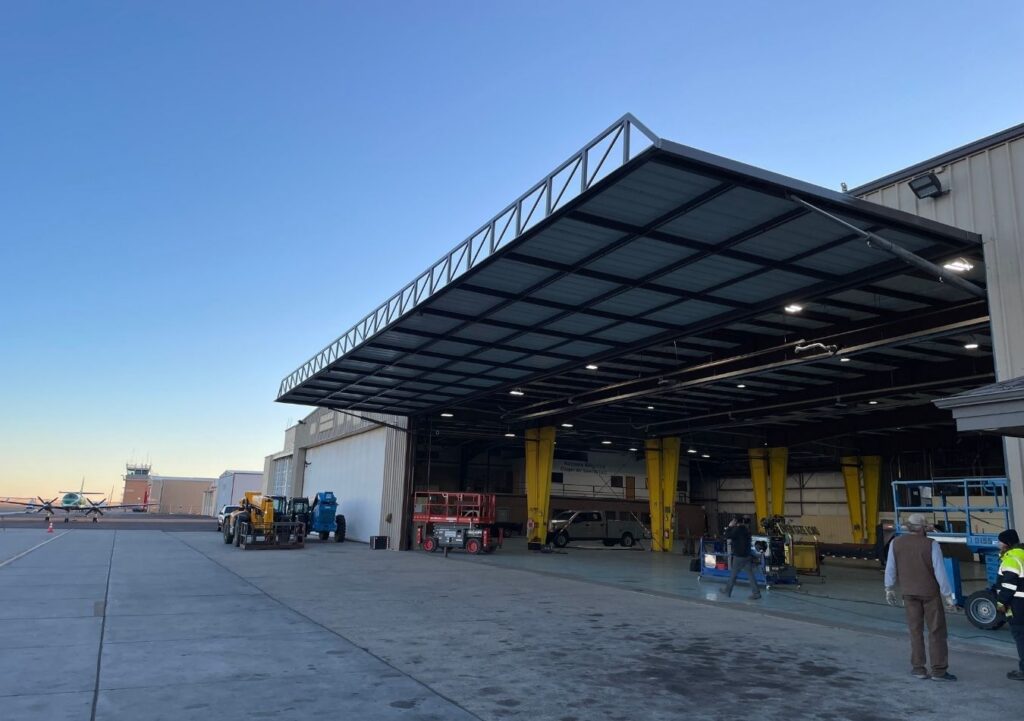
To reclaim that lost headroom without using cables, some designs introduce external steel arms or heavy cams to swing the door outward. While this clears the opening better than a bi-fold, it trades cable tensioning for a different mechanical headache: complexity. You aren’t just lifting a door anymore; you are operating a multi-jointed machine that requires perfect synchronization to function correctly.
Cam-style and linkage hydraulic door mechanisms share a reliance on leverage to get the job done. Instead of lifting the door’s weight directly, these systems push against the building’s header or side columns to lever the panel outward. It functions much like using a crowbar against a wall; the force required to swing the heavy steel frame out generates significant structural stress on your building’s frame, pushing back against the structure every time you cycle the hydraulics.
Every point where these arms connect represents a potential wear zone. In our gritty plains environment, dust and ice work their way into these joints, acting like sandpaper on the bushings and pins. Over time, standard hangar door maintenance escalates from simple greasing to replacing worn-out pivot points that have developed “slop.” A loose linkage doesn’t just rattle; it causes the door to close unevenly, compromising your weather seal and letting the winter draft in.
Ultimately, adding external arms is a workaround rather than a root solution. It attempts to force a door outward using complex geometry rather than simply supporting the weight efficiently. A truly robust system removes the need to push against your building entirely, utilizing a self-supporting frame that handles the load directly without the extra elbows and knees.
Maximizing Clearance with Direct-Load, Single-Panel Hydraulic Designs
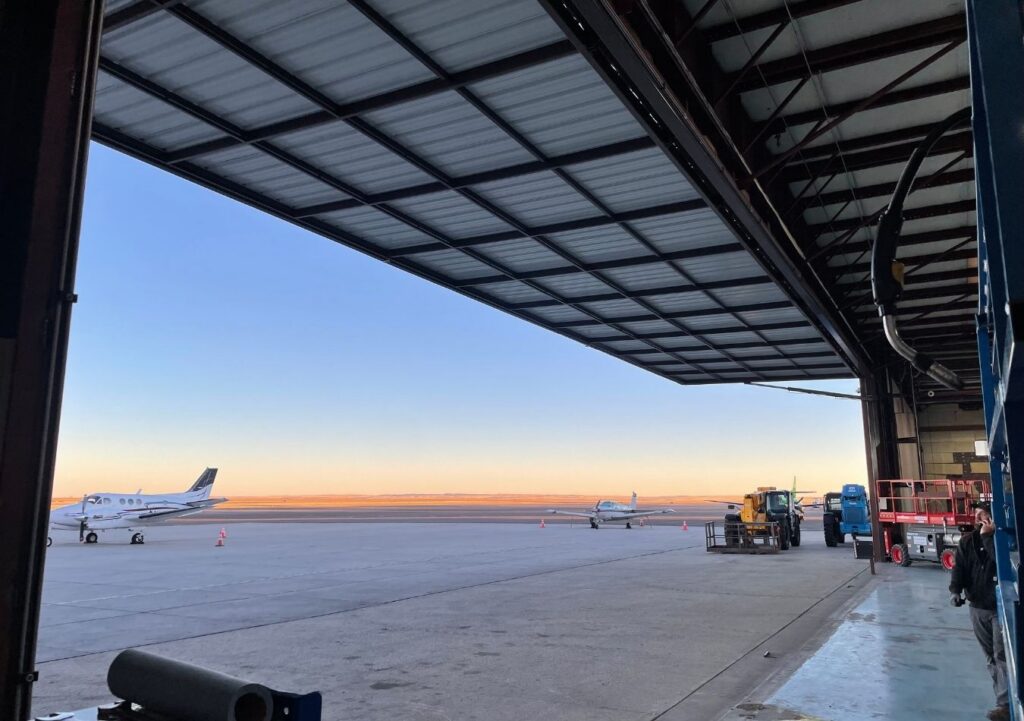
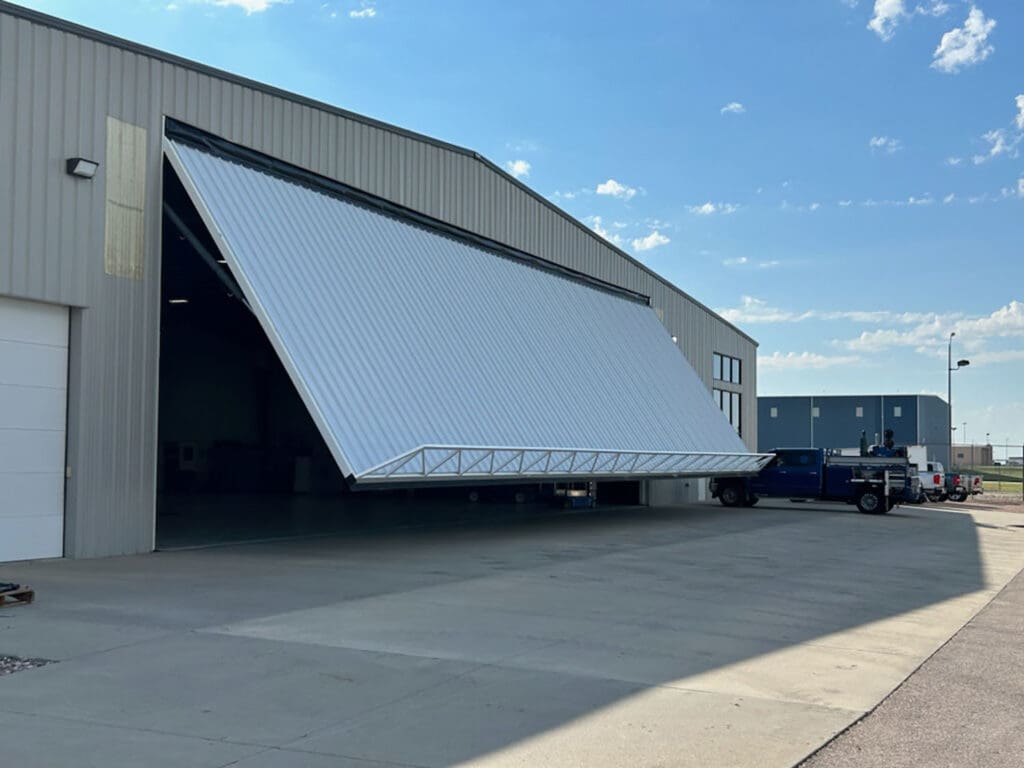
The most efficient way to open a wall is to stop fighting against it. Unlike linkage systems that lever against your header like a crowbar, the PowerLift direct load hydraulic hangar door design operates on a simpler principle: lifting straight up. The hydraulic cylinders attach directly to the door frame and the main building columns, creating a self-supporting triangle. This removes the horizontal stress that can warp wood-frame buildings over time, transferring the weight vertically down into the foundation where it belongs.
Losing six inches of headroom to a bi-fold wedge or a roll-up canister might not seem like much until you try to fit a slightly taller tail section through the opening. Because a single-panel hydraulic door swings completely outward and upward, you effectively lose zero inches of headroom. When the door is fully open, your clear opening height is virtually identical to your building’s header height, maximizing the usable space in your existing structure.
Simplicity also means eliminating the most vulnerable components found in traditional sliding or folding systems. By removing floor tracks and overhead rollers, PowerLift doors remove the primary failure points that plague hangars in the Dakotas and Wyoming. The design focuses on four core practicalities:
- Maximized Clearance: Use every inch of your framed opening.
- Zero-Track Reliability: Zero track hangar door benefits include no floor rails to shovel out, bend with heavy machinery, or freeze solid.
- Fewer Moving Parts: No roller hangar door advantages mean no bearings to seize or wheels to jump the track; just grease the hinges.
- Superior Seal: A single rigid panel locks tight against the frame, keeping wind and snow drifts outside.
This streamlined approach changes the equation for older structures that weren’t originally designed for heavy aviation loads. Since the door creates its own structural integrity rather than hanging entirely on a questionable header, it opens up new possibilities for upgrading aging pole barns and machine sheds.
Breathing New Life into Old Buildings: The Power of Retrofitting
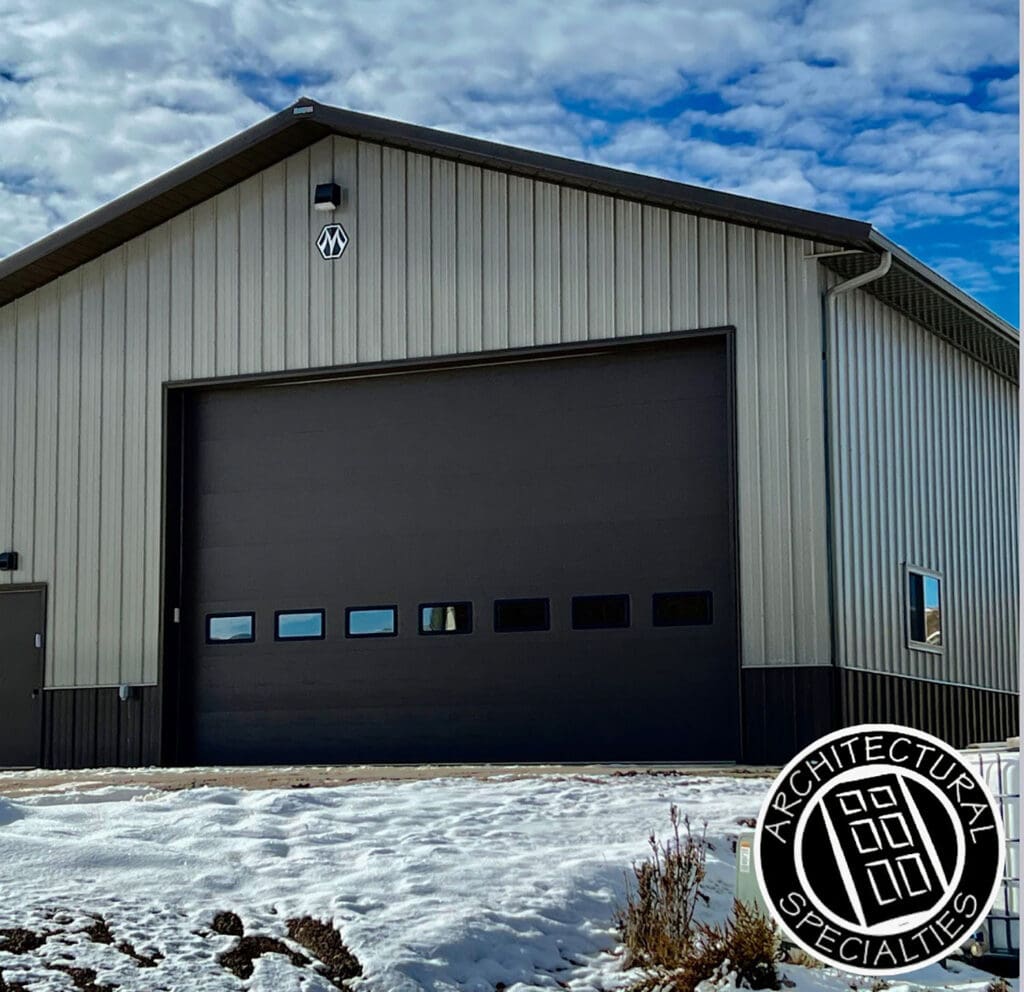
Transforming an existing machine shed or pole barn into a functional hangar is often far more cost-effective than pouring a new foundation. Many older agricultural buildings in the region have the square footage for aviation use but lack the entry clearance for a tail section. By choosing retrofitting old hangar doors with hydraulics, you can repurpose a standing structure that would otherwise be relegated to cold storage, effectively gaining a “new” building for the price of a renovation.
Gaining this utility often comes down to where the door sits relative to your building’s columns. Unlike traditional sliding doors that hang inside or between posts, an outside-mount installation bolts the door frame to the exterior face of your building columns. This approach not only maximizes your width but also adds roughly a foot of interior length to the structure, as the door swings out rather than consuming floor space. These PowerLift style door retrofit benefits mean you aren’t sacrificing valuable interior square footage just to get the door open.
Perhaps the most critical advantage for aging wood structures is the self-supporting nature of the hydraulic frame. Most older barns weren’t engineered to support heavy overhead loads, making aviation building upgrades risky if you rely on the existing truss system. A properly designed hydraulic door creates its own structural end-wall, transferring weight directly to the foundation through its independent steel columns rather than pulling on a tired wooden header. This reinforces your building against the elements, a necessary trait when facing the high winds common to the High Plains.
Why South Dakota and Wyoming Weather Demands a Track-Free Solution
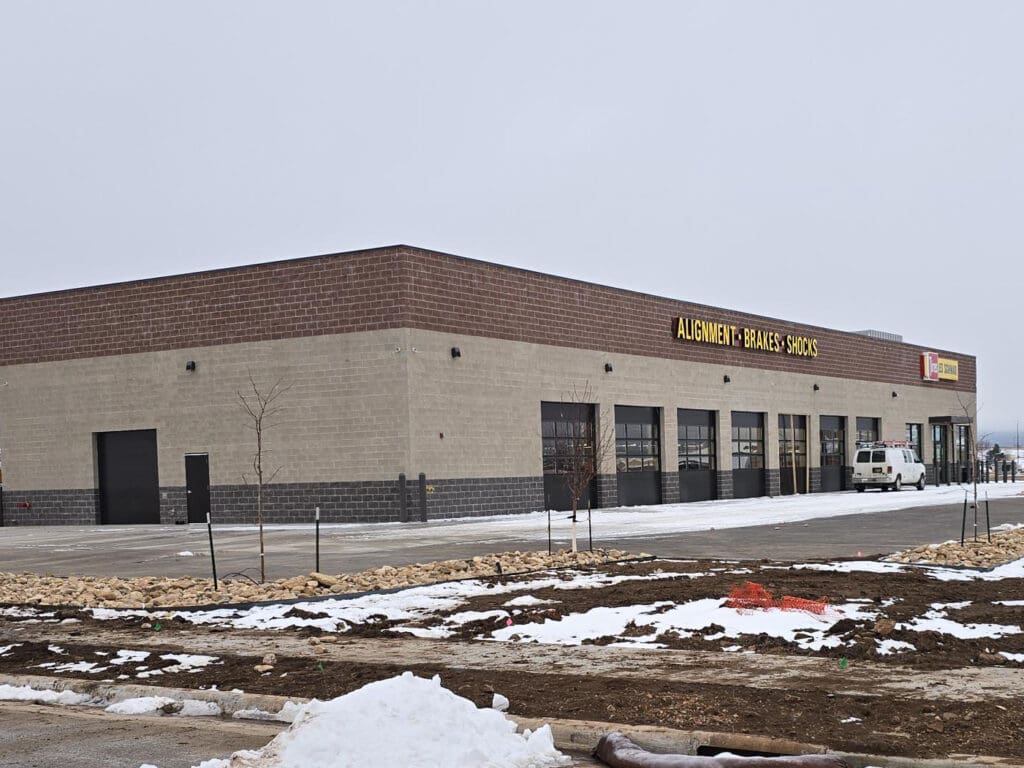
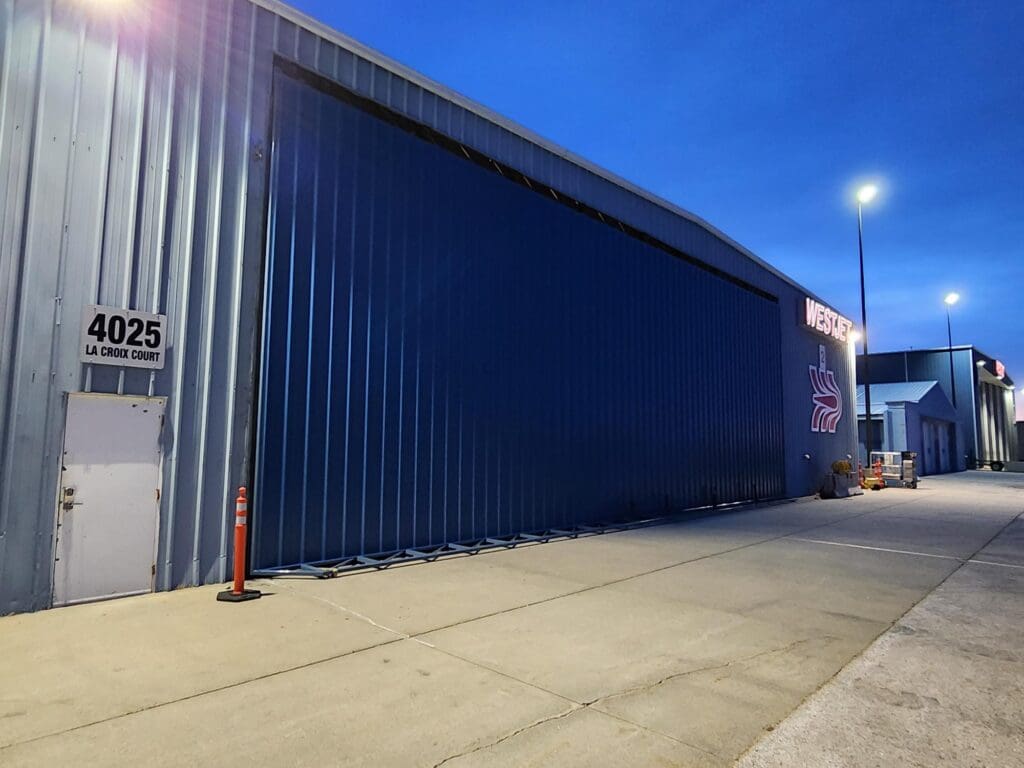
Anyone who has spent a winter on the High Plains knows that horizontal tracks are a magnet for disaster. When snow blows sideways and temperatures drop, bottom rollers inevitably freeze to the ground, leaving your aircraft trapped just when you might need it most. A Wyoming aircraft hangar door installation requires a design that eliminates these failure points entirely. Instead of sliding along a track that can easily clog with ice or grit, a single-panel hydraulic door swings outward, breaking any ice build-up instantly with the immense leverage of its cylinders.
Beyond just opening reliably, keeping the heat inside is a financial necessity. Traditional sliders or bi-folds often leave gaps at the hinges or floor, creating drafts that fight your heater all night long. The best hangar door for South Dakota weather utilizes a single rigid frame that pulls tight against the building jambs, much like a walk-in freezer door. This creates weather tight hangar door sealing systems that actually use the force of the wind to press the door tighter against the building, rather than rattling loose during a storm.
To ensure your hangar protects your investment year-round, look for these three weather-proofing essentials:
- Dual-seal weather stripping to eliminate air infiltration around the perimeter.
- Ice-shedding design that allows the door to swing clear of drifts without shoveling.
- High wind-load ratings engineered specifically for open-terrain gusts.
Getting these details right requires a builder who knows the territory, which is why local manufacturing is more than just a convenience – it’s a quality safeguard.
The Single-Source Advantage: Why Architectural Specialties’ Local Fabrication Matters

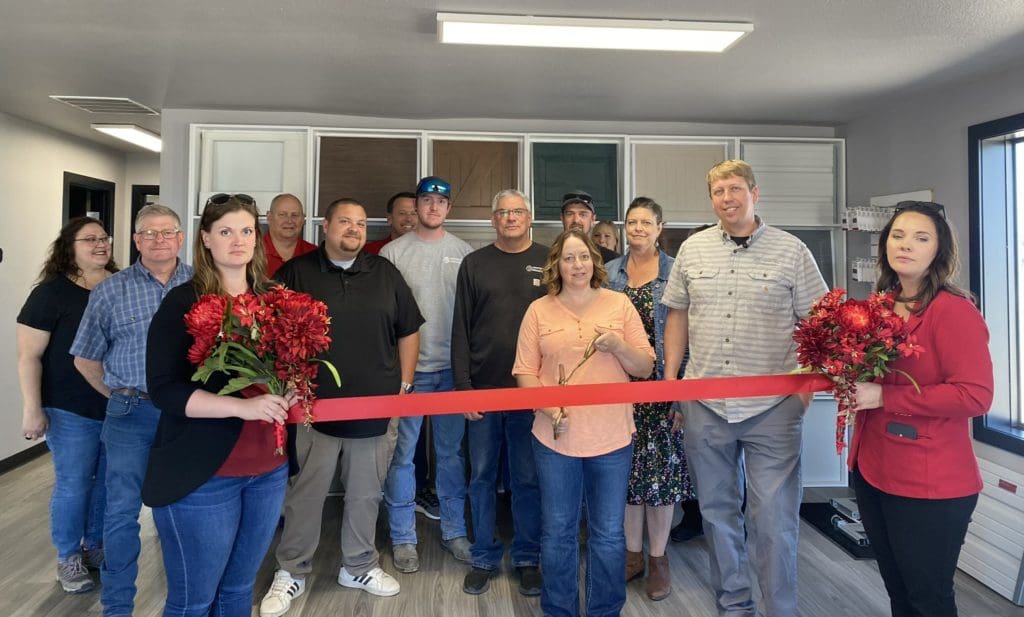
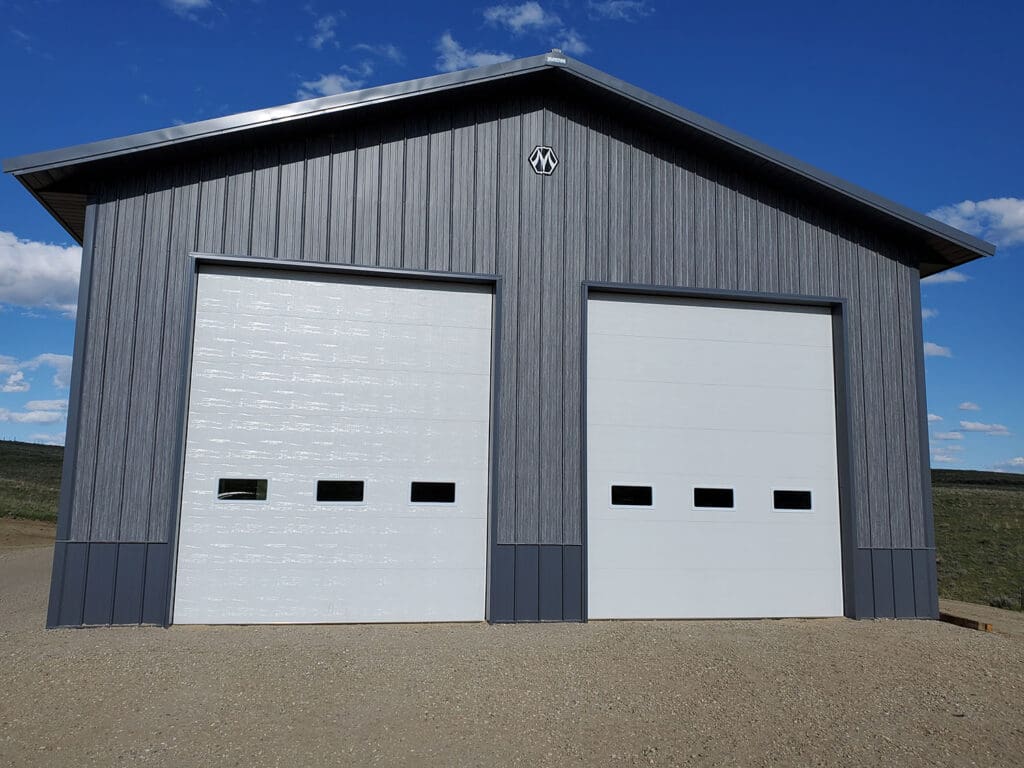
When you buy a door from a national catalog, you often end up with three different companies pointing fingers at each other if something goes wrong: the manufacturer, the shipper, and the contracted installer. Working with Architectural Specialties removes this friction because the people who measure your building are the same ones welding the steel and bolting it to your header. This single-source approach ensures that your custom manufactured hydraulic hangar doors are built to fit your specific rough opening perfectly, rather than forcing you to modify your building to fit a standard product crate-shipped from three states away.
Nothing ruins a project faster than an installation crew rushing to finish so they can drive twelve hours back home. An Architectural Specialties hangar door installation relies on local crews who understand the nuances of South Dakota and Wyoming construction, from regional snow load requirements to the specific wind bracing needed for pole barns in open terrain. By handling every step in-house, we eliminate the communication gaps that typically lead to structural errors, ensuring the hydraulic geometry works in harmony with your building’s frame from day one.
Reliability extends far beyond the initial hangar door installation; it requires knowing that support is just a local phone call away rather than a generic customer service hotline. Having a manufacturer nearby means parts, service, and adjustments happen on your timeline, protecting your aircraft access year-round. With a clear understanding of the mechanical advantages and local support options, you can now focus on the final steps of selecting the right specifications for your facility.
Building Your Aviation Legacy: A 3-Step Decision Framework

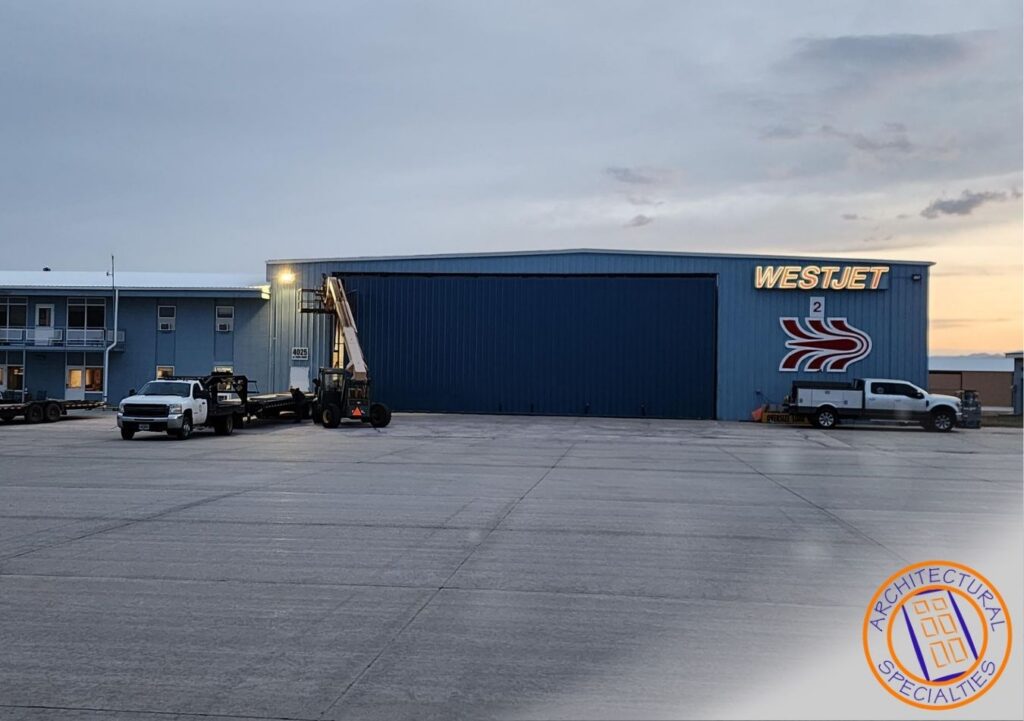
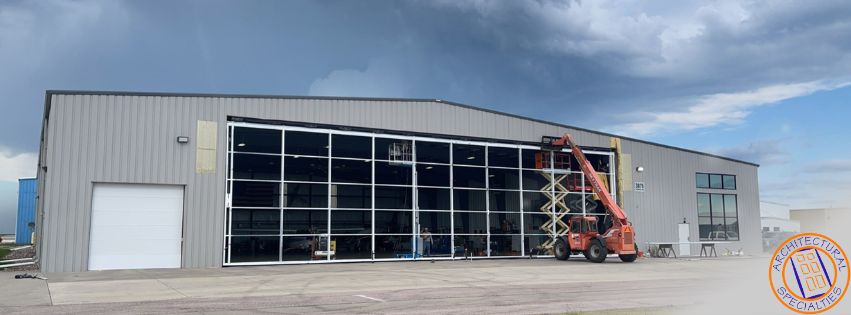
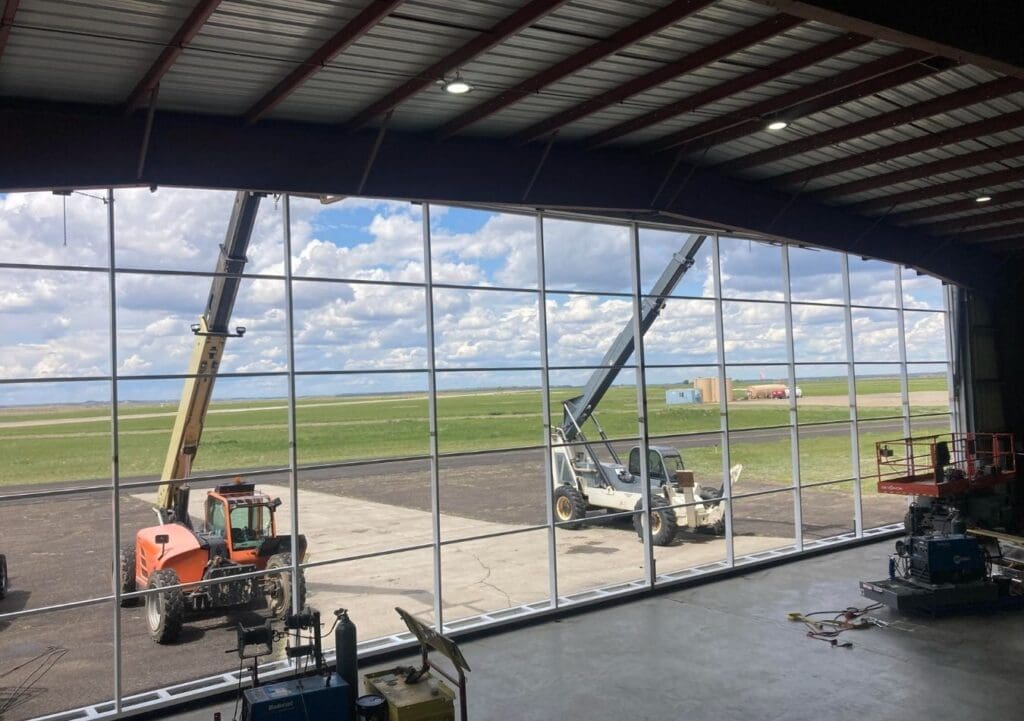
What if you could finally upgrade to that taller aircraft without tearing down your building? By understanding how to maximize hangar clear opening height, you move beyond the limitations of track-reliant systems. You now recognize that a PowerLift single-panel design isn’t just a door; it’s a structural asset that reclaims usable space and eliminates the winter maintenance headaches common in our region.
Start your upgrade process here:
- Measure clearance: Confirm the exact height needed for your current or future aircraft tail.
- Check the frame: Determine if your header supports standard airplane hangar doors or requires a self-supporting retrofit.
- Go local: Connect with a manufacturer who installs their own work to ensure accountability.
Don’t leave your building’s functionality to the lowest bidder. Prioritize reliability by creating a custom spec sheet for your aviation building door selection guide.
Take the first step toward a maintenance-free hangar by discussing your project with the local team at Architectural Specialties today.